


Storm Drain Maintenance: Your First Line of Defense Against Flooding
Prevent property damage and flooding with professional storm drain maintenance.
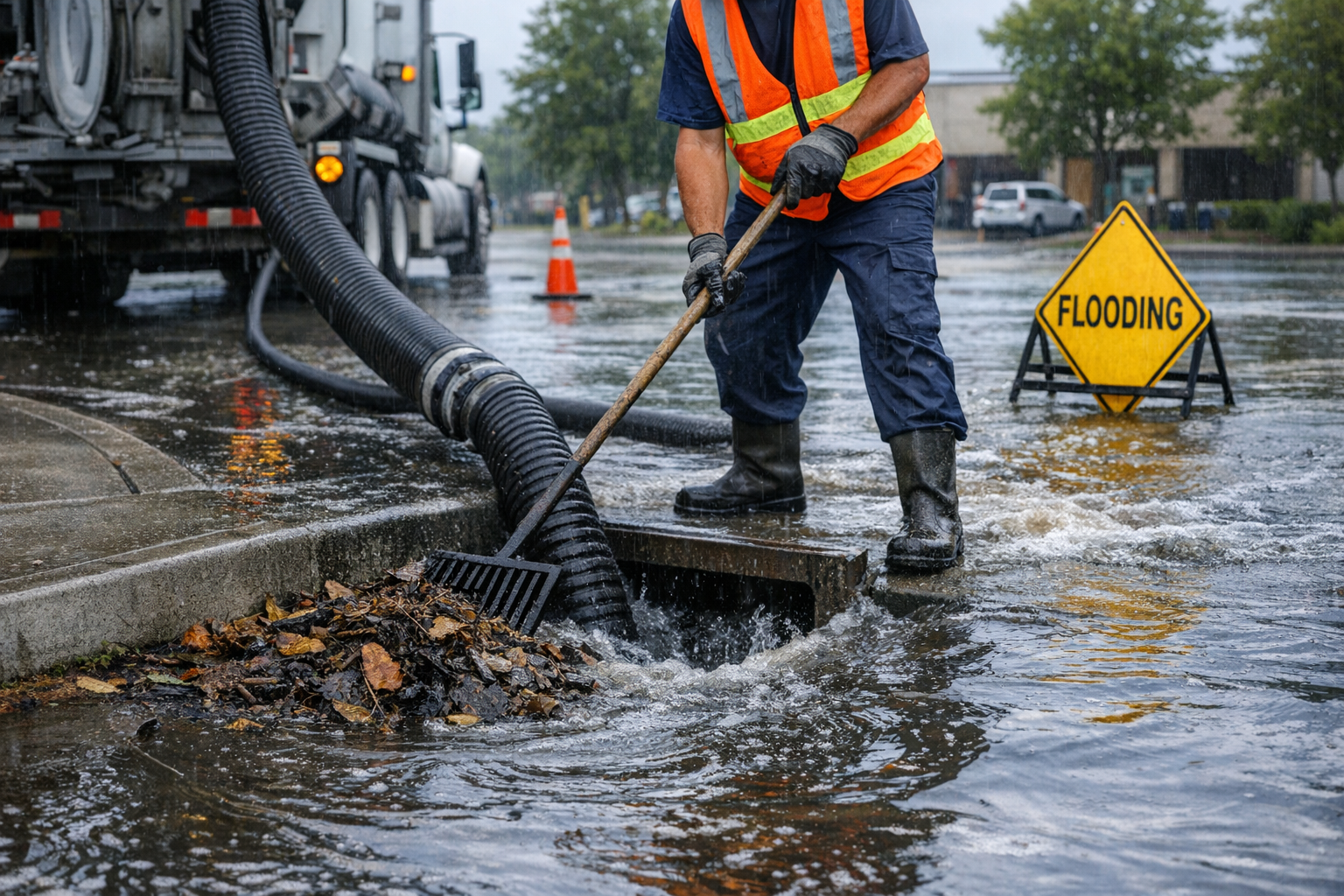
Flooding occurs rapidly, particularly in regions prone to sudden, heavy rainfall. When rainwater lacks a clear path for exit, it accumulates around building perimeters and parking lots. Effective storm drain maintenance serves as the primary mechanism to prevent these hazardous water accumulations before they compromise your infrastructure. Storm drains function by capturing surface runoff and channeling it through a network of underground pipes. When these systems operate at peak efficiency, water transitions through the infrastructure without restriction. However, neglect allows sediment and environmental debris to obstruct this flow, significantly increasing the probability of a flood emergency.
How Functional Drainage Protects Property Foundations
The primary objective of a storm drain system involves moving runoff safely away from structural elements. Over several months, organic matter and trash settle within the basins and piping. This internal buildup slowly reduces the total volume of water the system can manage during a storm.
Without consistent inspections, water begins to pool in areas designed for dry traffic. Standing water is not merely an inconvenience; it actively weakens asphalt pavement and seeps into concrete foundations. Maintaining clear pathways ensures that liquid remains in motion, exiting the property rather than saturating the ground near your structural supports.
The Technical Risks of System Blockages
Skipping routine service creates internal pressure issues that extend beyond visible surface puddles. Obstructions within the pipes cause backflow, where water returns through the entry point or forces its way out of manholes and inlets. In severe cases, high-pressure backups damage the physical integrity of the pipes, leading to soil erosion or sinkholes.
Furthermore, blocked drains often force water to find alternative, unintended routes. This redirection frequently impacts nearby basements or underground utility lines. Dealing with the aftermath of a flooded site involves high costs for cleanup and structural restoration. Preventive cleaning is a predictable operational expense that eliminates the volatility of emergency repairs.
Utilizing Camera Inspection Services for Accuracy
Visual assessments from the surface rarely reveal the true condition of a drainage network. Modern camera inspection services allow technicians to locate specific blockages, or pipe misalignments deep within the system. This data-driven approach ensures that cleaning efforts target the exact areas causing restricted flow.
For properties with large paved surfaces or high-volume commercial traffic, these inspections are vital. They identify early signs of buildup that might otherwise go unnoticed until a major weather event occurs. Using specialized equipment to verify the internal state of your drains removes the guesswork from your facility management plan.
Establishing a Reliable Service Schedule
The most effective time to address drainage health is before the arrival of heavy rain cycles. Waiting for visible overflow usually indicates that the system has already reached a point of failure. A consistent schedule helps maintain the reliability of the entire waste management network throughout the year.
📞 ContactOn My Way Septic today to schedule professional storm drain maintenance and make sure your system is ready before the next heavy rainfall.

