


Septic Tank: What It Is and How It Works
What Every Property Owner in Miami Should Know About Their Septic System
If you own property with a septic tank system, understanding how it works is not optional, it’s essential. Many homes and some commercial buildings in South Florida rely on septic systems instead of city sewer lines. Yet most owners don’t think about their system until something goes wrong.
Let’s break it down in simple terms.
A septic tank is an underground wastewater treatment system. It handles everything that goes down your drains, toilets, sinks, showers and in some cases, commercial kitchen waste. Instead of sending wastewater to a municipal sewer plant, the system treats it right on your property.
How a Septic Tank System Works
A septic tank system has two main parts: the tank and the drainfield.
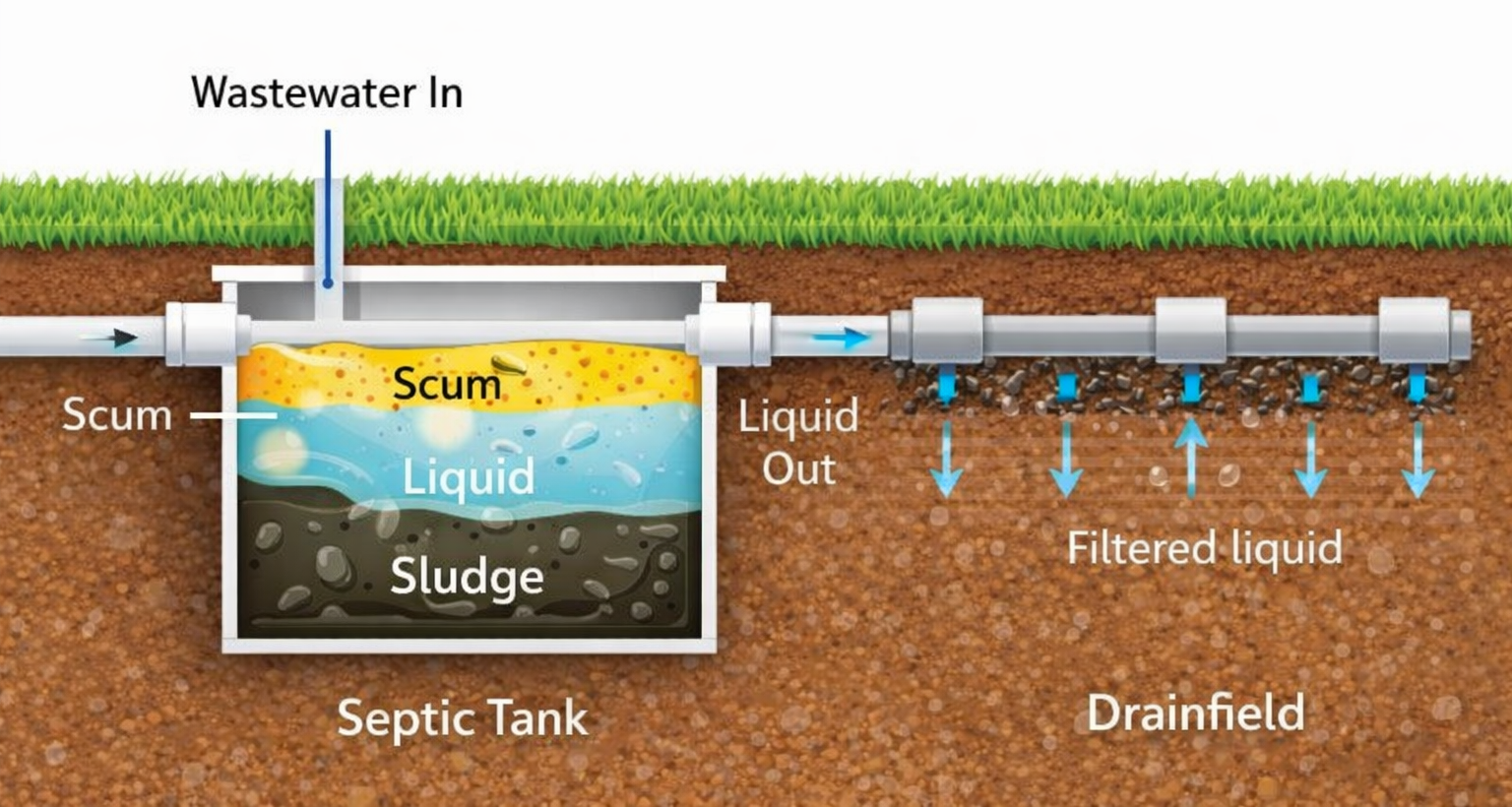
When wastewater leaves your home or building, it flows into the underground tank. Inside the tank, solids settle at the bottom and form sludge. Oils and grease float to the top and create a layer called scum. The liquid in the middle flows out into the drainfield.
The drainfield is a network of buried pipes that slowly releases the filtered liquid into the soil. The soil naturally treats and absorbs the remaining wastewater.
It’s a simple system but it only works properly when maintained.
Over time, the sludge at the bottom builds up. If the tank isn’t pumped regularly, solids can overflow into the drainfield. When that happens, repairs can become expensive and disruptive.
Why Septic Tank Maintenance Matters
South Florida’s environment makes maintenance even more important. High water tables and heavy rains can stress septic systems. If your tank is already full, storm season can make problems worse.
Here are common signs your system needs attention:
- Slow drains throughout the property
- Gurgling sounds in plumbing
- Sewage odors outside
- Wet or soggy patches in the yard
- Backups inside the building
Waiting too long doesn’t save money. In fact, replacing a failed drainfield can cost far more than routine pumping.
For homeowners, regular service protects your property. For restaurants or commercial properties, it protects your business operations and reputation.
How Often Should You Service a Septic Tank System?
Most residential systems should be pumped every 3 to 5 years. Larger households or commercial properties may require more frequent service.
The exact schedule depends on:
- Tank size
- Number of occupants
- Water usage
- Whether grease or food waste enters the system
If you’re unsure when your tank was last pumped, that’s usually a sign it’s time to check.
Understanding how your septic tank works gives you control. You don’t have to wait for a backup to take action.
📞 If you own a septic tank system and want peace of mind, contact On My Way Septic today to schedule an inspection or pump-out. Prevent problems before they start — and keep your system running the way it should.

