


Lift Station Maintenance: Preventing Mechanical Failures and Backups
Protect your commercial infrastructure
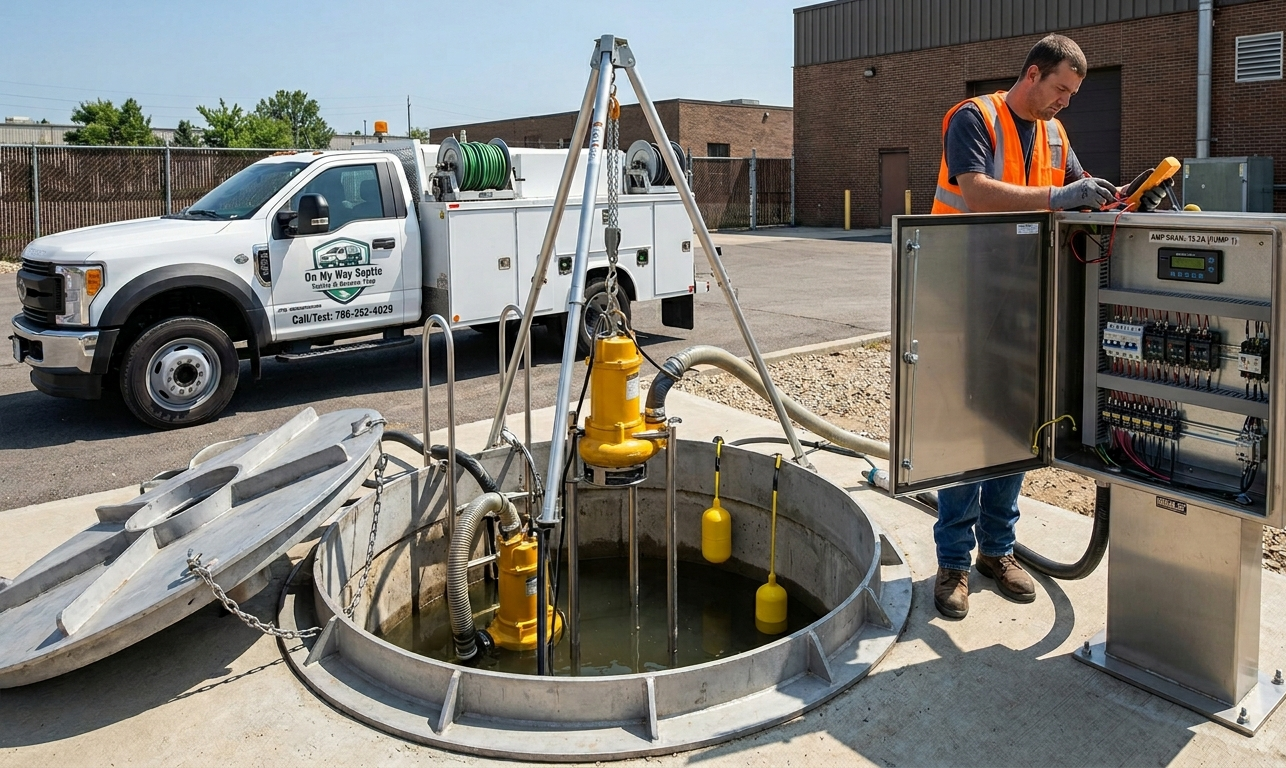
Subsurface wastewater infrastructure operating below the main municipal sewer line cannot rely on gravity alone. These systems depend entirely on specialized collection wells equipped with submersible pumps to move waste upward to the public grid. Because these setups handle high volumes of solids and liquid waste daily, skipping routine oversight leads to rapid mechanical decline. Ensuring consistent operations requires structured technical management rather than waiting for an emergency alert to trigger a response.
The Mechanics of Submersible Pump Wear
The core of any pumping assembly consists of heavy-duty impellers engineered to handle solid materials. Over time, debris such as wet wipes and grease chunks enter the collection wet well, binding around the rotating components. This accumulation forces the motor to draw higher electrical currents to meet operational demands, generating excessive internal heat.
When an impeller becomes severely restricted, the motor eventually burns out or trips the circuit breaker. Routine inspections involve pulling the pumps from their guide rails to clear physical obstructions and monitor mechanical wear. Addressing minor physical restrictions prevents the complete destruction of expensive motor assemblies.
Electrical Control Panel and Float Switch Vulnerabilities
A pumping network relies on electrical telemetry to function autonomously. Float switches float on the surface of the wastewater, sending signals to the external control panel to activate or deactivate specific pumps as water levels change. In a corrosive environment filled with hydrogen sulfide gas, electrical contacts oxidize quickly.
Grease buildup also coats float switches, weighting them down or locking them in a fixed position. If a float fails to rise, the wet well overflows into the surrounding property. Conversely, a stuck float keeps a pump running continuously until it runs dry and burns out. Technicians test voltage consistency and float responsiveness during every maintenance cycle to ensure the system responds accurately to fluid changes.
Mitigating Fat, Oil, and Grease Accumulation
Commercial districts frequently battle grease cap formation within their underground storage wells. When warm grease cools, it floats to the top of the chamber, creating a thick, hardened crust. This layer traps incoming debris and restricts the volume capacity of the well.
Regular pressure washing and vacuum pumping break down this crust before it hardens into an unmanageable mass. Neglecting this buildup forces the system to operate under constricted conditions, accelerating the wear on every connected valve and pipe joint. Keeping the liquid surface clear preserves the original design capacity of the asset.
Establishing Proactive Operational Schedules
Relying solely on visual checks or high-water alarms introduces unnecessary operational risks. A managed approach utilizes quarterly or bi-annual technical audits depending on daily flow volume. These checks verify check-valve functionality, structural integrity of the concrete wet well, and overall system efficiency.
Documenting pump performance trends allows operators to predict component lifecycles accurately. Replacing a failing seal or an aging capacitor during a scheduled visit remains significantly less expensive than emergency deployment during a peak operational failure.

