


Beyond the Surface: The Power of Internal Pipe Mapping
Precision Camera Inspection Services
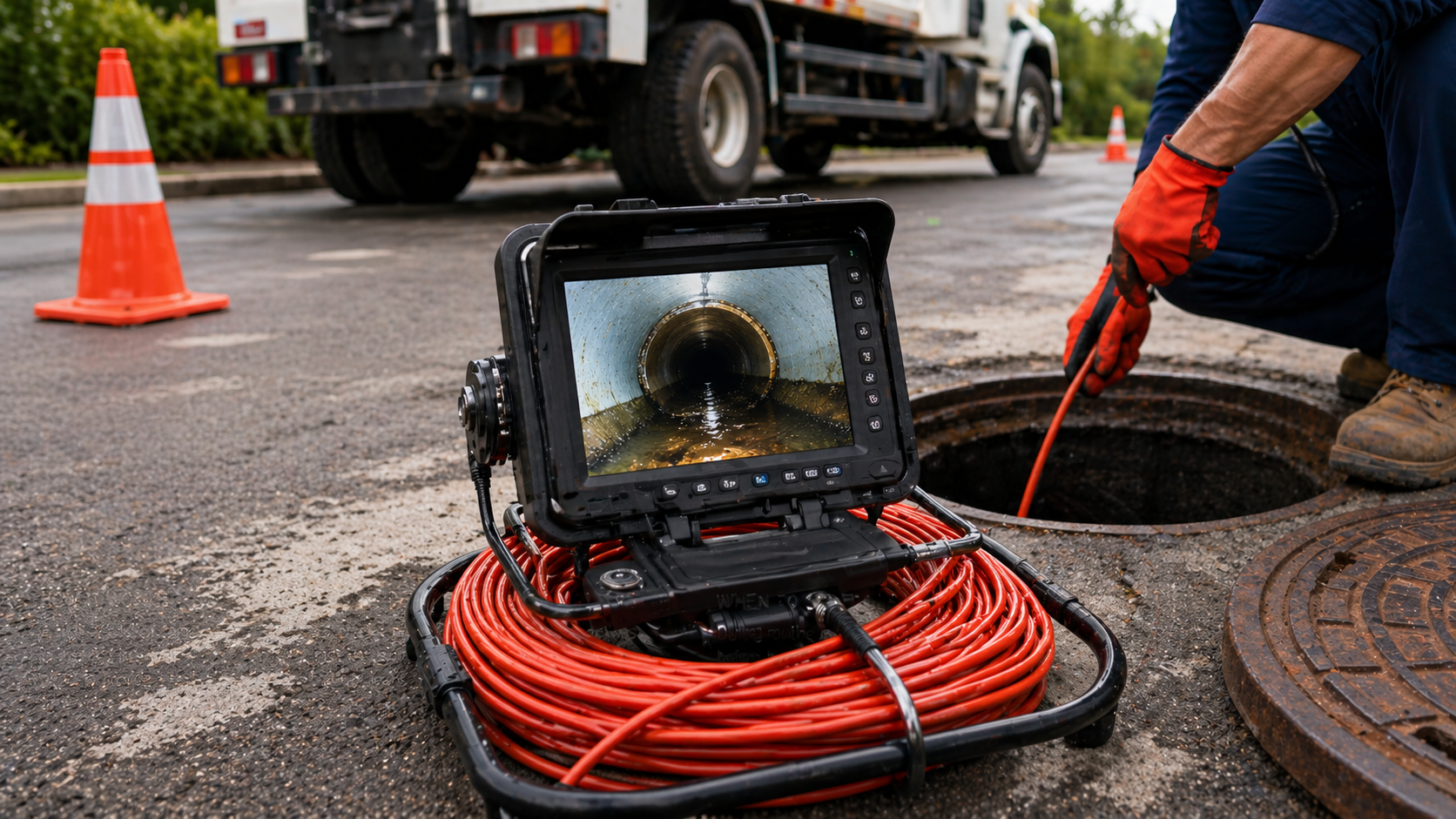
Managing plumbing and septic infrastructure is frequently a reactive process, typically initiated only after a significant system failure occurs. The problem is that surface symptoms rarely tell the whole story. Instead of relying on broad assumptions or invasive digging, high-definition camera inspections allow us to see exactly what’s happening inside your infrastructure, providing a precise diagnosis before a single shovel touches the ground.
How it Works: Precision Through Video Technology
The process is as efficient as it is non-invasive. A technician guides a flexible, waterproof fiber-optic cable into the drainage line, equipped with a high-resolution camera that transmits a live feed to an external monitor. As the lens moves through the system, it documents the integrity of every joint and pipe segment in real time.
This technology does more than just find a clog; it identifies the exact depth and distance of the issue from the access point. By utilizing an integrated signal transmitter and an above-ground locator, we can pinpoint the repair site with surgical accuracy. This level of detail ensures that maintenance efforts are concentrated solely on the affected area, avoiding the high costs and disruption of exploratory trenching.
Uncovering Hidden Structural and Biological Threats
Many critical failures within wastewater systems develop silently over years. Tree roots, for instance, often exploit microscopic gaps in pipe joints, expanding steadily until they create massive blockages or cause the pipe to collapse.
Beyond root intrusions, high-definition inspections reveal:
- Structural flaws: Offset joints, "bellies" (sagging sections where water pools), and corrosion.
- Operational obstructions: Heavy scale buildup from minerals or grease that narrows the pipe’s diameter.
- Environmental risks: Cracks that allow wastewater to leak into the soil, compromising the property’s structural health.
Eliminating the "Guesswork" Tax
Attempting to clear a blockage without knowing its composition is a financial gamble. For example, using a standard drain snake on a collapsed pipe might offer temporary relief, but it fails to address the underlying damage, leading to inevitable—and costly—recurring backups.
Relying on camera inspections removes the uncertainty that inflates labor costs. When the cause is known, the correct equipment is deployed the first time. This targeted strategy prevents unnecessary excavation of parking lots or landscaping, significantly reducing the total cost of ownership for your infrastructure.
Strategic Monitoring: When to Schedule an Audit
A visual inspection should be a proactive management tool, not just an emergency response. Persistent slow drainage or unusual odors are often early warning signs of a hidden leak. For commercial properties, annual audits are essential to ensure high-volume lines remain clear.
Furthermore, an inspection is a critical safeguard during property transfers. Verifying the integrity of underground lines ensures you aren't inheriting a failing system. In modern waste management, proactive video monitoring remains the most reliable method for maintaining a functional, compliant, and cost-effective network.

